

⛵ Sailing South at 21: A Storm, a Song, and A Prayer
From The Journeyman | Substack Edition #5
On the day I turned twenty-one, I didn’t blow out candles—I cast off dock lines. What began as a voyage down the East Coast from Newport to Ft Lauderdale turned into a trial by wind and water, one that would shape not only my seamanship but my sense of self. It was September 22, 1982, and I was chasing freedom with a tiller in one hand and the songs of my youth in my head.
This excerpt from The Journeyman captures the raw, exhilarating stretch between Newport and Annapolis—a Nor’easter at sea, a lost tender, coffee at dawn in a still sea, and the quiet dignity of surviving something bigger than yourself. It's a young man’s rite of passage told from the helm of memory, soaked in salt and song.
These are the moments that taught me how to navigate storms—on the water, and later, in life. I share them now not just as a sailor’s tale, but as a compass point in the larger map of reinvention this book traces.
Settle in. Smell the diesel. Feel the cold rain on your face. And sail with me back to the beginning.
—Tim
Life is A Journey, Don’t You Know
Written by Tim Cooney
From the Book, The Journeyman by Tim Cooney
Sailing South on My Twenty-First Birthday
It was finally September 22, 1982, my twenty-first birthday, and the day we agreed would be our departure date. The first leg of our journey would be a nonstop sail down the east coast off Long Island, into Delaware Bay, and down the Chesapeake Bay to Annapolis. We left Newport around 1:00 PM. We planned to sail the outside passage off Long Island to Cape May, New Jersey, up through the Delaware Bay. Then we would motor our way through the Delaware/Chesapeake Canal, into the Chesapeake Bay, and down to Annapolis.
On the first leg of the trip, Chris, Amy's captain, and I waited for Chris’s brother Tim and his friend Mark from Idaho to arrive at the boat. They had flown in several days earlier and would accompany us on our sail south. We were all treated to a farewell party at my parents' house the night before our departure. Having an extra crew on board during this maiden voyage was a good idea because we were about to sail into one of the worst storms I would ever encounter in my forty years of sailing offshore.
The day started with much excitement. All the provisions had been stowed, and all systems had been checked and rechecked. The fuel tank was full, the tender was tied up with a double line, and all the crew were on board. My father was in his red flannel Boy Scout jacket, which only the Explorers used. This branch of the Boy Scouts was reserved for only the most experienced scouts.
My dad had worn that jacket throughout my youth, and I always envied the Explorers more than any other scouting group. His arms were crossed as he stood on the dock, watching me while I hurried on and off the boat, making final preparations. I felt that somehow, by crewing on this adventure, I had joined the ranks of the Explorers and had won his respect.
My two younger brothers were watching silently by his side. There wasn’t anything left to say or do, so I cast off the dock line. We waved, slowly motored off the dock, and exited the bay into open water.
The weather radio crackled, and a light breeze was blowing out of the south-east with variable winds and shallow seas. The tender dragged behind us as Newport faded away and Block Island appeared. The island was gone as fast as we saw it, and all we could see after that was a black ocean as darkness fell, and we sailed past Montauk.
It wasn’t long before we were out of sight of land, and the sky suddenly grew darker. The wind began to blow hard while the rain started to fall, softly at first, then harder as we sailed into the storm, and the waves began to swell.
We were about one hundred miles off Long Island when the weather turned vicious and violent. The storm that was supposed to blow out to sea had decided to hug the coast, and we were right in its path. The rain came down in cold sheets, and the waves continued to build as we sailed into the pitch black. The only light was from a small deck light beaming off the mast spreaders.
There was just enough light to see the vast waves approaching us in steady intervals. These were the biggest waves I had ever seen! They were taller than the mast, and as we sailed through each peak and trough, the tender rose on the crest next to me. I could look to my port side and see the tender thirty feet above my head racing alongside me.
As we sailed through the oncoming waves, the tender ricocheted down the back side of the wave as it raced past us. This went on for several hours until the main line connecting the small boat to ours finally snapped under the repeated strikes, and the beautiful dinghy I worked on all summer was lost.
While I was on midnight watch in the pitch-black night, with rain pelting my face and the wind howling in my ears, my eyes witnessed thirty-foot waves roll past me, and I was simultaneously gripped in fear and exhilaration.
To pass the fear, I sang songs in my head. I have always had a knack for remembering lyrics, and my many years of listening to rock music have given me quite an inventory of songs. One of the songs I tuned into at that moment was a Cat Stevens song called “Miles from Nowhere” off the album “Tea for the Tillerman.”
Coincidentally, I was gripping a cold, wet tiller when this song came to me out of the recesses of my mind. As the storm raged around me, I sang, “Miles from nowhere, think I’ll take my time, oh yeah… to get there, look up at the mountain, I must climb, oh yeah, to get there. God, my body has been a good friend, but I won’t need it when I reach the end.”
I have so many songs to turn to when I need them. I was thankful for the music legacy of my youth, which always comforted me in my times of need. Before leaving the dock in Newport, I ensured I had a cassette player installed in the main salon. There was another song I had been listening to all summer from the new Australian band called Men at Work. Colin Hay was a Scottish songwriter and musician. His band had the number one album worldwide in the summer of 1982 with songs like “Who Can It Be Now,” “Land Down Under,” and many others. I was glad to have the Aussies on board.
As my watch ended, it was 3:00 pm; the storm was still raging as Chris poked his head out the hatch and said, “How’s it going out there, Tim?” “All’s well,” I reported, “but I’m ready to get out of this weather.” As Chris made his way out of the cabin, he grabbed the tiller to take his shift. I slid down the companionway into the salon, peeling out of my soaked foul-weather gear, and realized I was soaked down to the skin.
There was no point in finding dry clothing to change into, so I wrapped myself in a wet sleeping bag and lay down in the quarter-berth next to the diesel engine, a Cummings purring along steadily. The engine's purring comforted me as I lay there shivering in wet clothing, wrapped in a damp sleeping bag.
Each wave we sailed through would result in a loud crash that would echo and vibrate through the boat, and there was a sound like you hear when you hold a conch shell up to your ear, but the engine kept on purring, a steady, comforting sound through it all. The white noise was my focus as I sang myself to sleep and thought, “What am I doing here?”
I would get my answer to that question in just a few hours when I would wake to the smell of fresh coffee and the beautiful sunrise off the Atlantic. We would sail past the Manhattan skyline, watching it shimmer to the starboard side as we slowly and quietly motored along the New Jersey Coast on a dead-calm sea as smooth as glass.
The contrast made me breathless as I joined my crewmates in the cockpit. I sipped my coffee, but I had yet to hear a word. We all looked at the skyline on one side and the sunrise on the other as we approached Cape May and sailed into Delaware Bay.
We had just sailed through a monster storm, and I was happy to survive. As we sailed up the bay, we began cleaning up the boat and preparing for the next leg of our journey. We sailed past Atlantic City and up the bay toward Philadelphia.
We reached the Chesapeake-Delaware Bay Canal around 9:00 PM. This was the only transit between the two Bays, and it was filled with cargo ships going in and out of Baltimore and Philadelphia. We were a 36-foot sloop sailing between these 900 to 1500-foot ships in the moonless night. We would sail the Amy alongside one of these monsters and slip into a lock with them. As the water filled the lock, we would rise and fall to the next level with the skyscraper ships next to us.
Looking up from the deck, it was hard to see the tops of the ships, and it felt like we were in a canyon. Their horns blew, metal banging against metal, men’s voices yelling instructions to the ship crew. Water rushed into the locks, then vanished under the boat as we were released from the lock, racing to get out of the path of the great ships as they slowly made their way out of the lock and into the Chesapeake Bay.
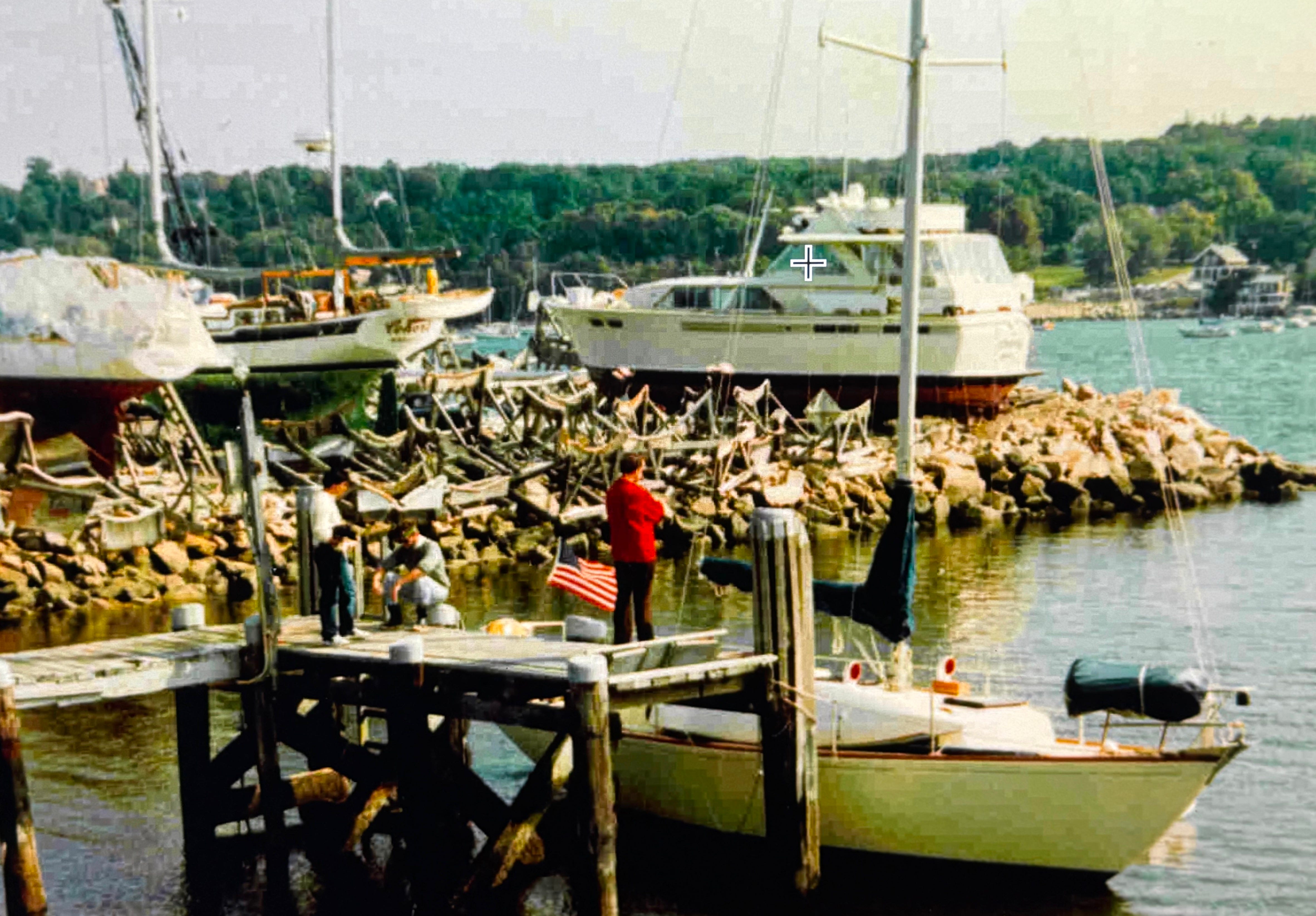
I was on the dock just before departure, and my dad was in his red Explorer jacket with his arms crossed.
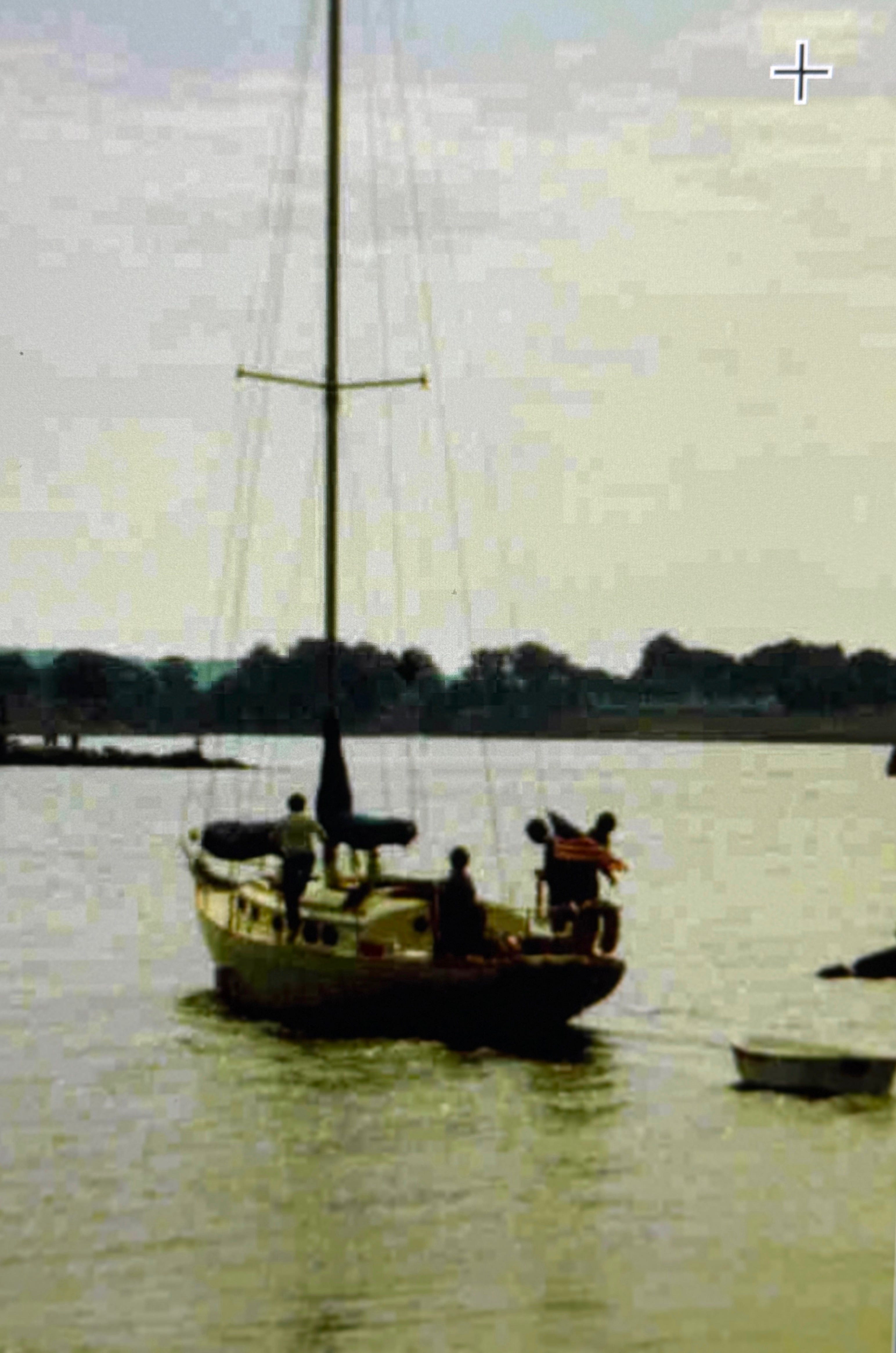
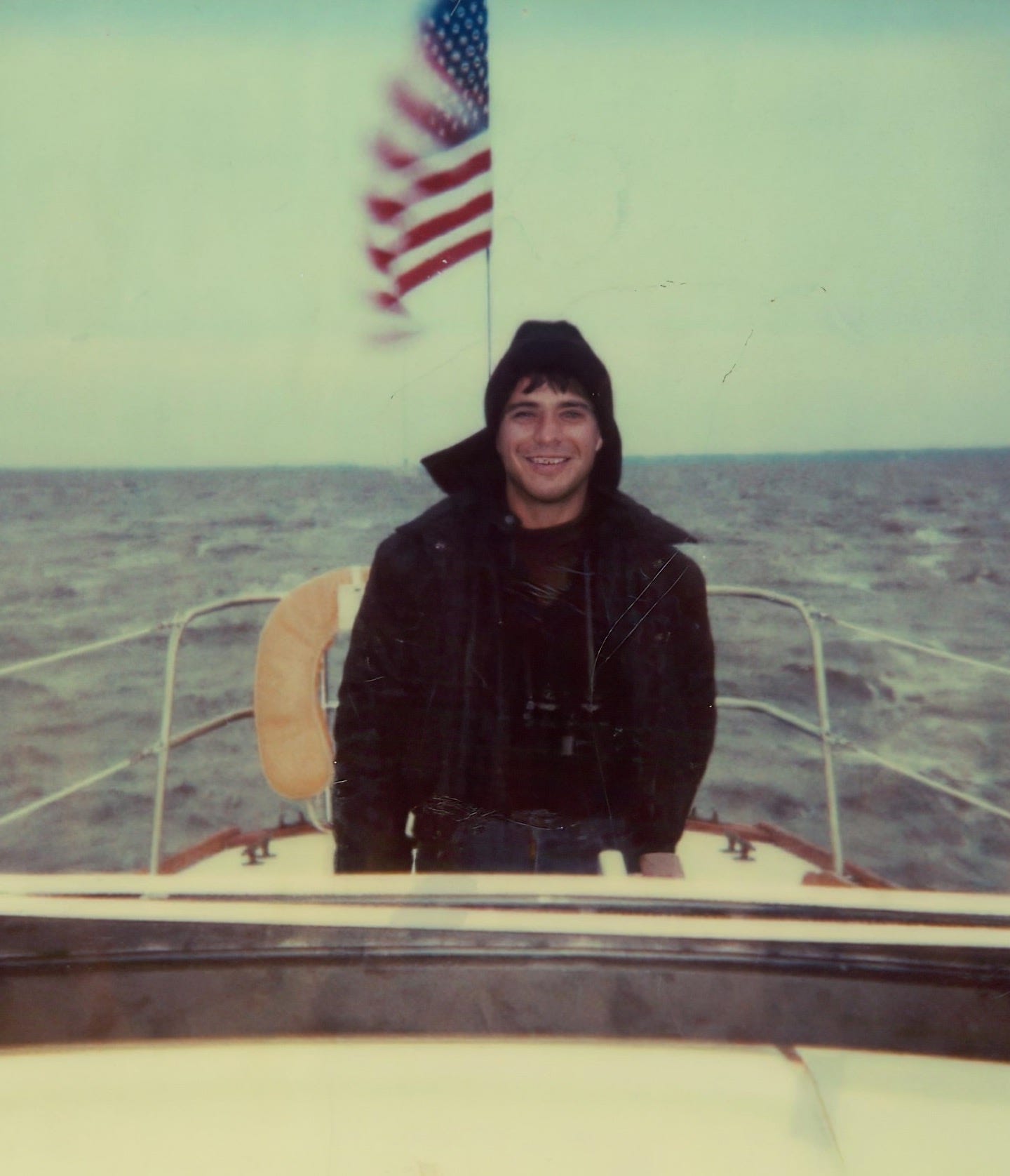
I was at the helm on the first leg of the journey just before nightfall, and the Nor`easter hit us off Long Island.
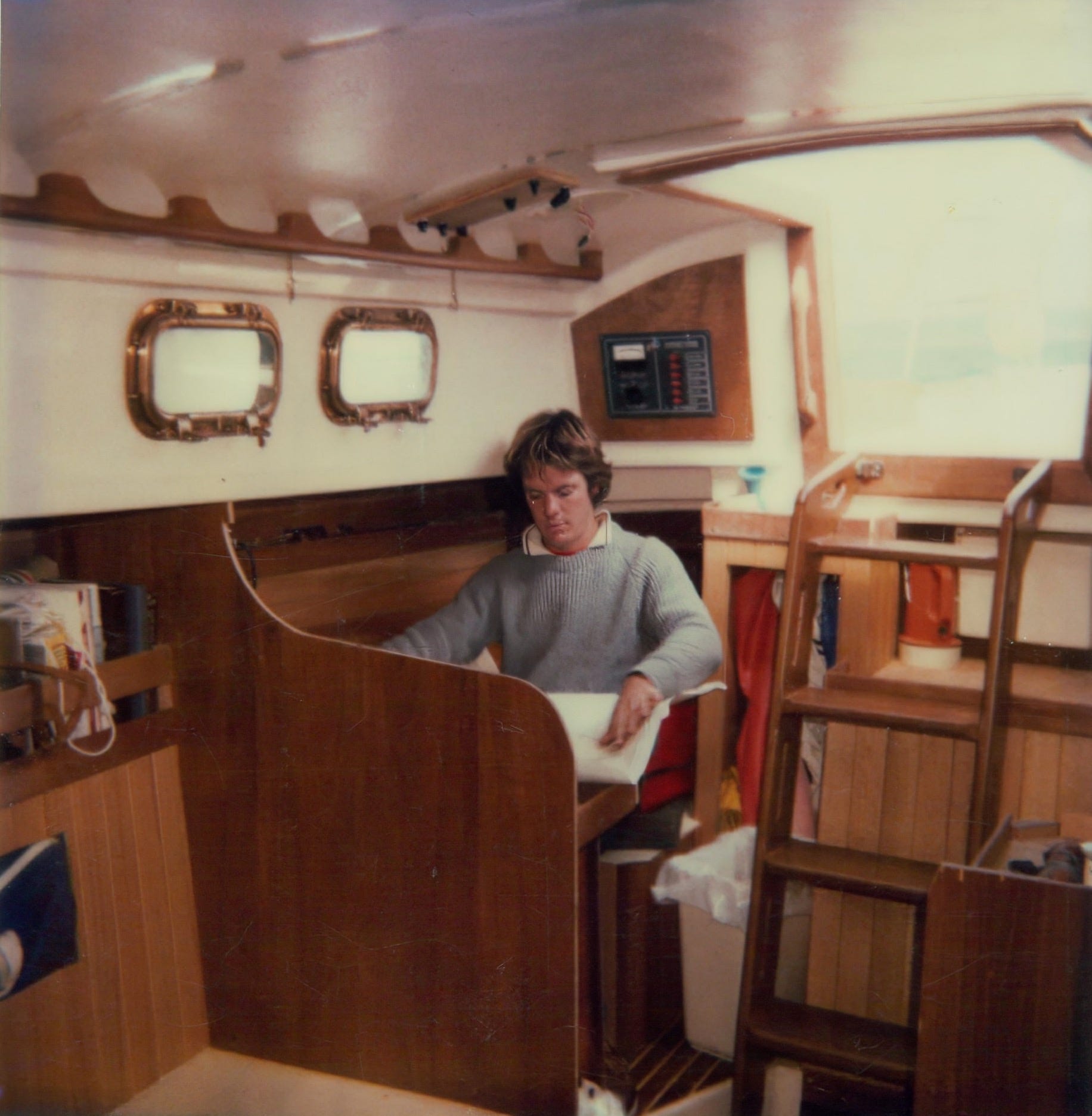
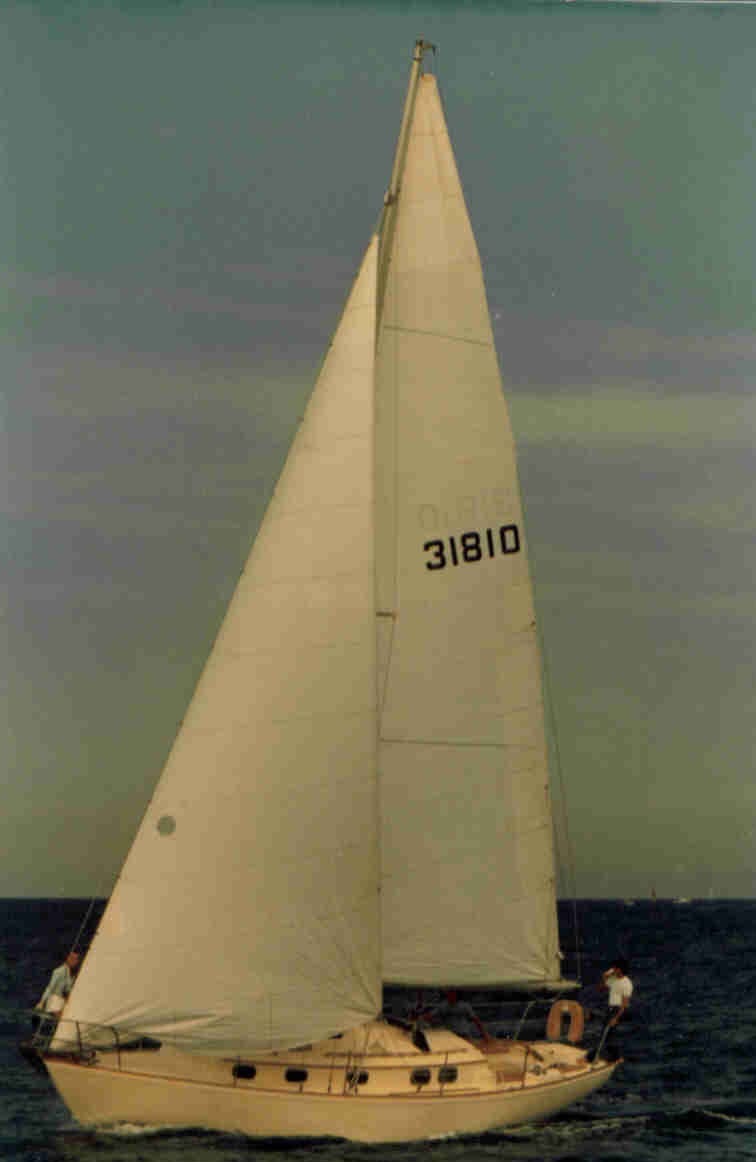

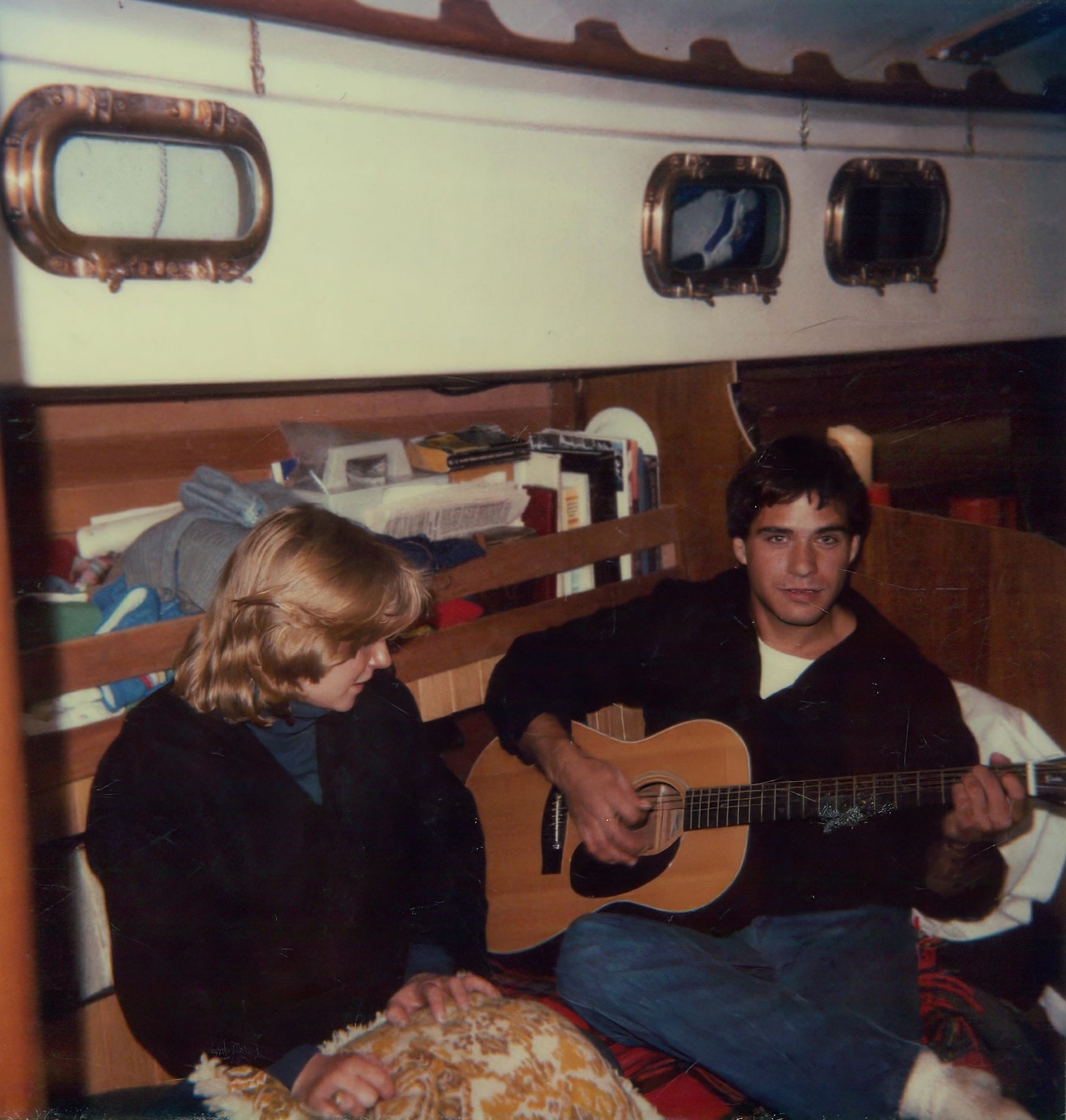
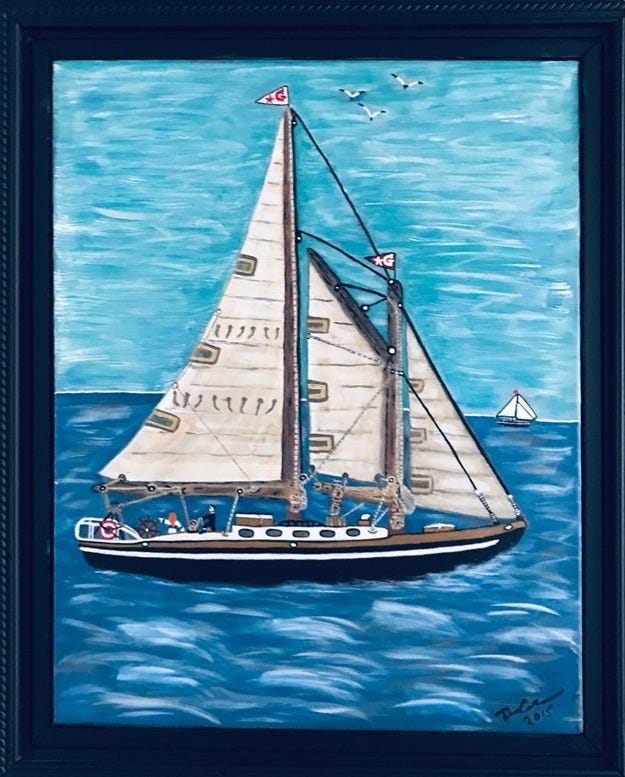
⛵ Final Log: The Storm Breaks, but the Compass Holds
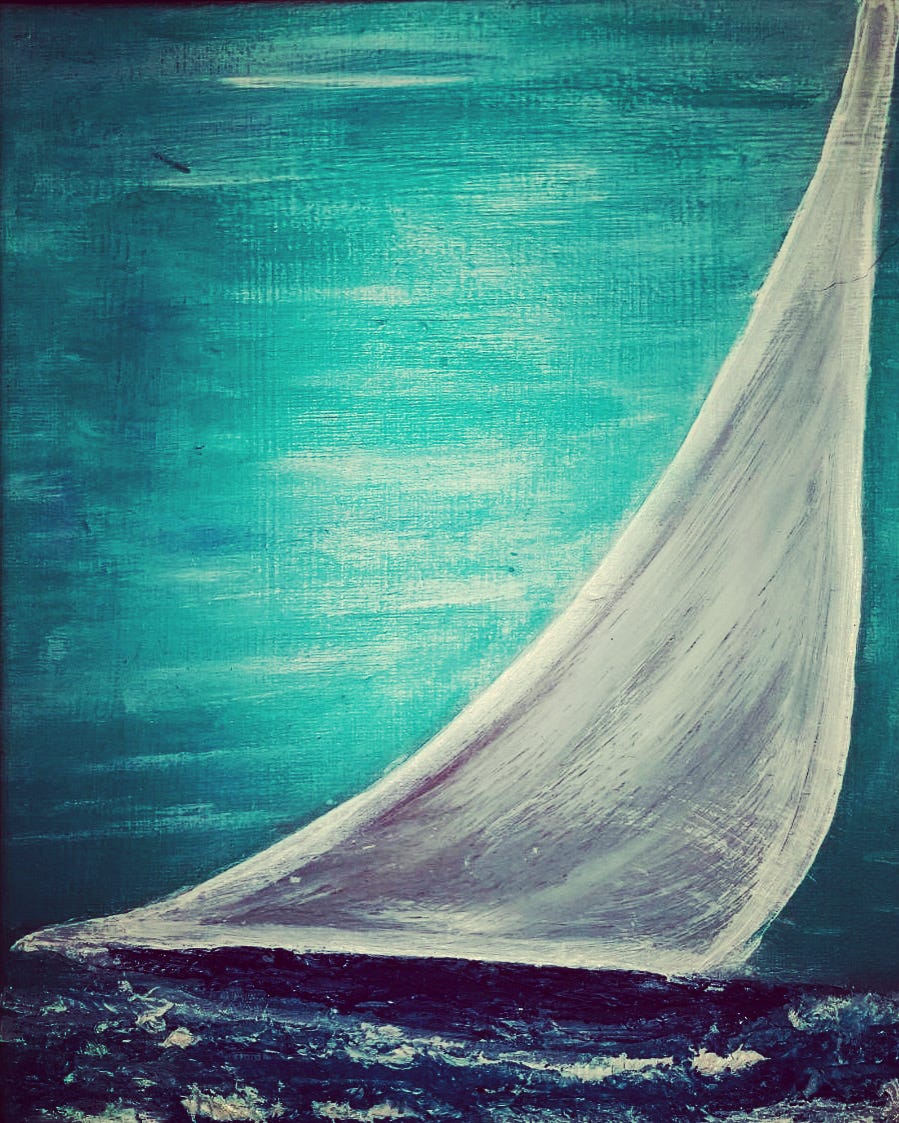
Looking back at these photographs—grainy Polaroids, handwritten captions, snapshots of salt-stained joy—I see more than a young man learning to sail. I see a boy trying to become a man, a dreamer gripping the tiller with a prayer in his throat. From Newport to Fort Lauderdale, from sketchbooks to sea charts, I carried more than gear on that voyage—I carried hope, shame, music, fear, and the first faint shape of who I’d become.
Those memories—of a friend at the chart table, a stranger becoming family, a storm giving way to sunlight—are no longer just mine. I’ve lifted them from their pages and brought them here, to you. And as I share these scenes now, I invite you not only to witness them—but to remember your own crossing. The one that changed everything.
Until the next edition,
—Tim
🧭 Footer
The Journeyman is a serialized memoir by Tim Cooney, author, artist, and founder of SunTurtle Studios. Each post pairs a story with a song, art, and an archive. To hear the music, view the paintings, or dive deeper into the journey, visit:
📺 YouTube Channel
https://www.sunturtlestudio.com.
https://www.sunturtlestudio.com/
Share this voyage with someone searching for their own compass.
Because it’s never too late to begin again.